ADDITIONAL MENU
Archives
-
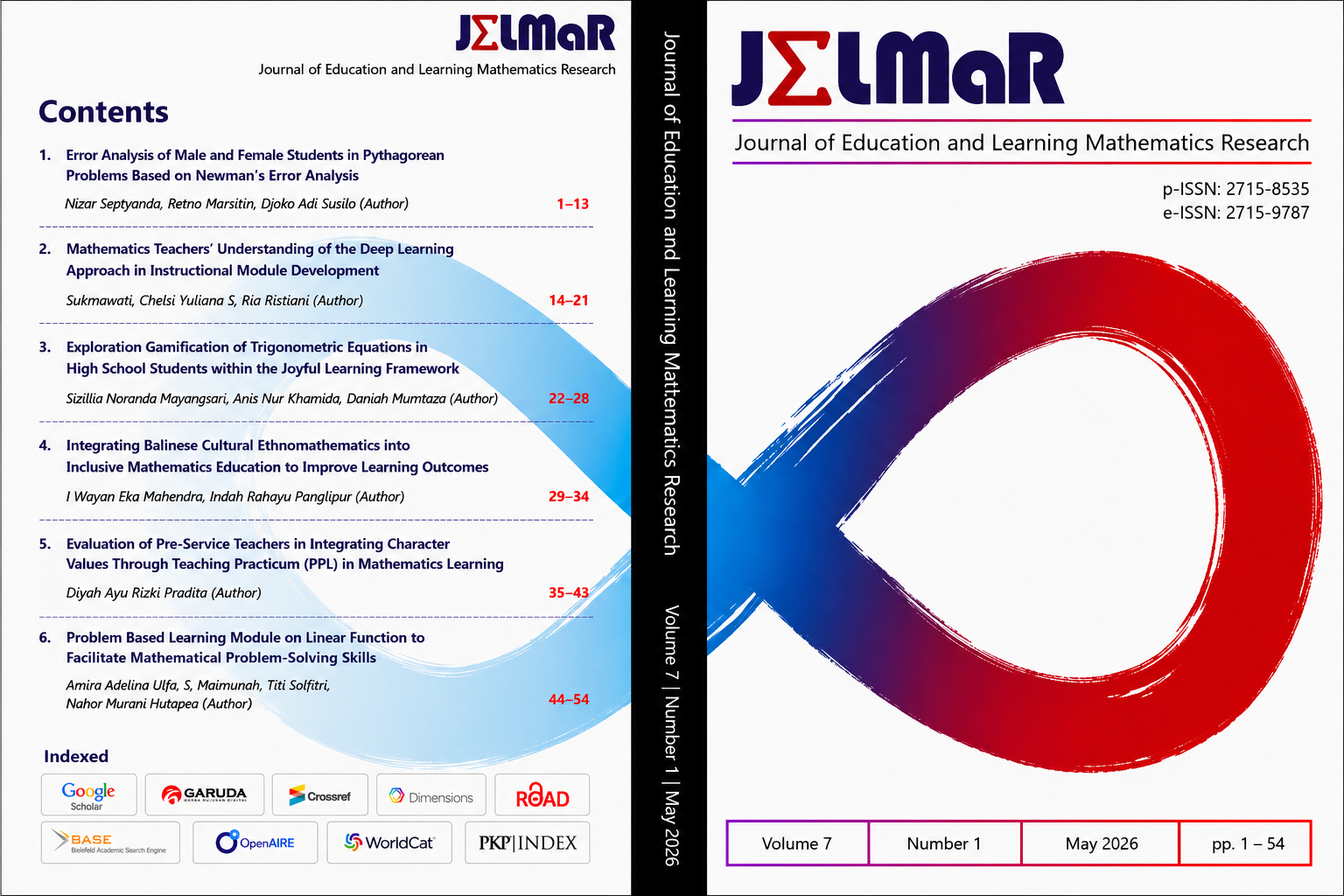
Mei 2026
Vol. 7 No. 1 (2026)Volume 7 Number 1 (Mei 2026) of the Journal of Education and Learning Mathematics Research (JELMaR) presents six articles addressing current developments in mathematics education. The studies explore students’ mathematical errors, deep learning approaches, gamification in mathematics learning, ethnomathematics, character education integration, and problem-based learning modules. This issue highlights innovative and culturally responsive approaches that support meaningful mathematics learning, problem-solving skills, and the development of twenty-first-century competencies.
pp. 1–54 | p-ISSN: 2715-8535 | e-ISSN: 2715-9787
-
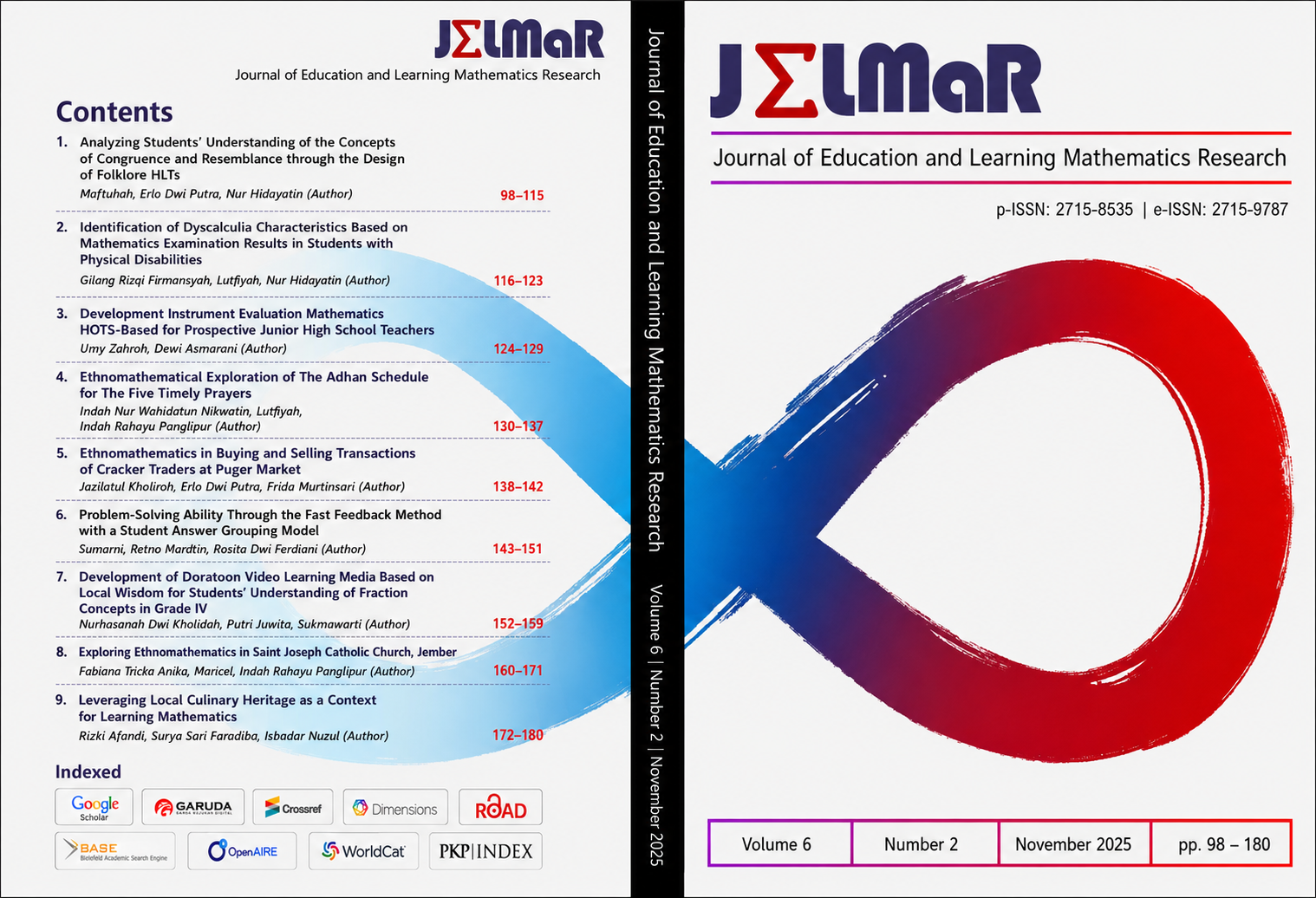
November 2025
Vol. 6 No. 2 (2025)Volume 6 Number 2 (November 2025) of the Journal of Education and Learning Mathematics Research (JELMaR) presents nine research articles focusing on mathematics education, including ethnomathematics, mathematical understanding, problem-solving, mathematics learning media, special needs education, and HOTS assessment. This issue highlights innovative learning approaches, local cultural contexts, and technology-supported mathematics instruction to enhance students’ mathematical thinking and meaningful learning experiences.
pp. 98–180 | p-ISSN: 2715-8535 | e-ISSN: 2715-9787
-
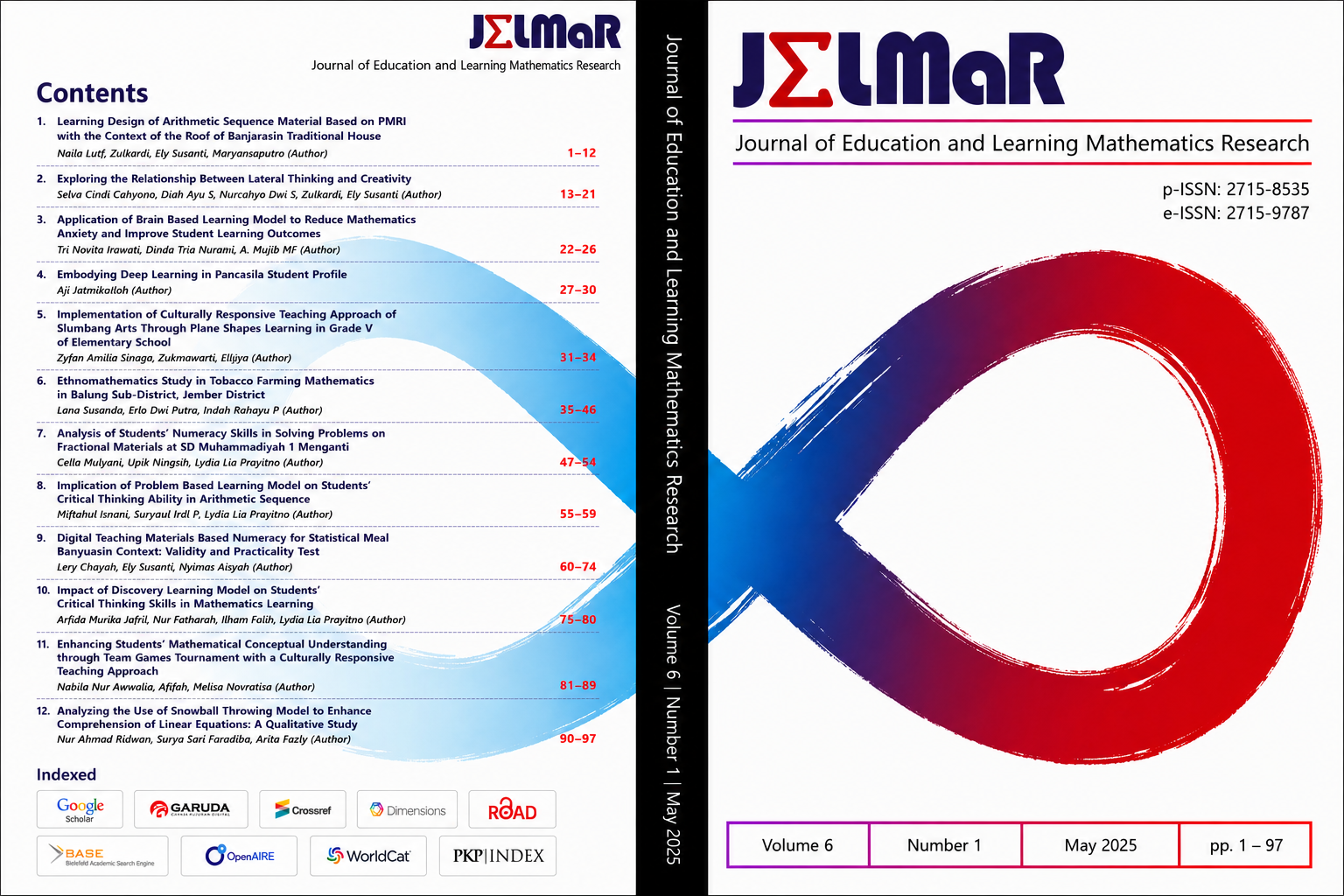
Mei 2025
Vol. 6 No. 1 (2025)Volume 6 Number 1 (Mei 2025) of the Journal of Education and Learning Mathematics Research (JELMaR) presents twelve scholarly articles that explore contemporary issues and innovations in mathematics education. The topics include PMRI-based learning design, mathematical creativity, mathematics anxiety, deep learning, culturally responsive teaching, ethnomathematics, numeracy, critical thinking, digital teaching materials, discovery learning, and collaborative learning approaches. Collectively, these studies contribute to the advancement of mathematics teaching and learning by integrating local cultural contexts, innovative pedagogies, and twenty-first-century competencies to foster meaningful and effective learning experiences.
pp. 1–97 | p-ISSN: 2715-8535 | e-ISSN: 2715-9787
-
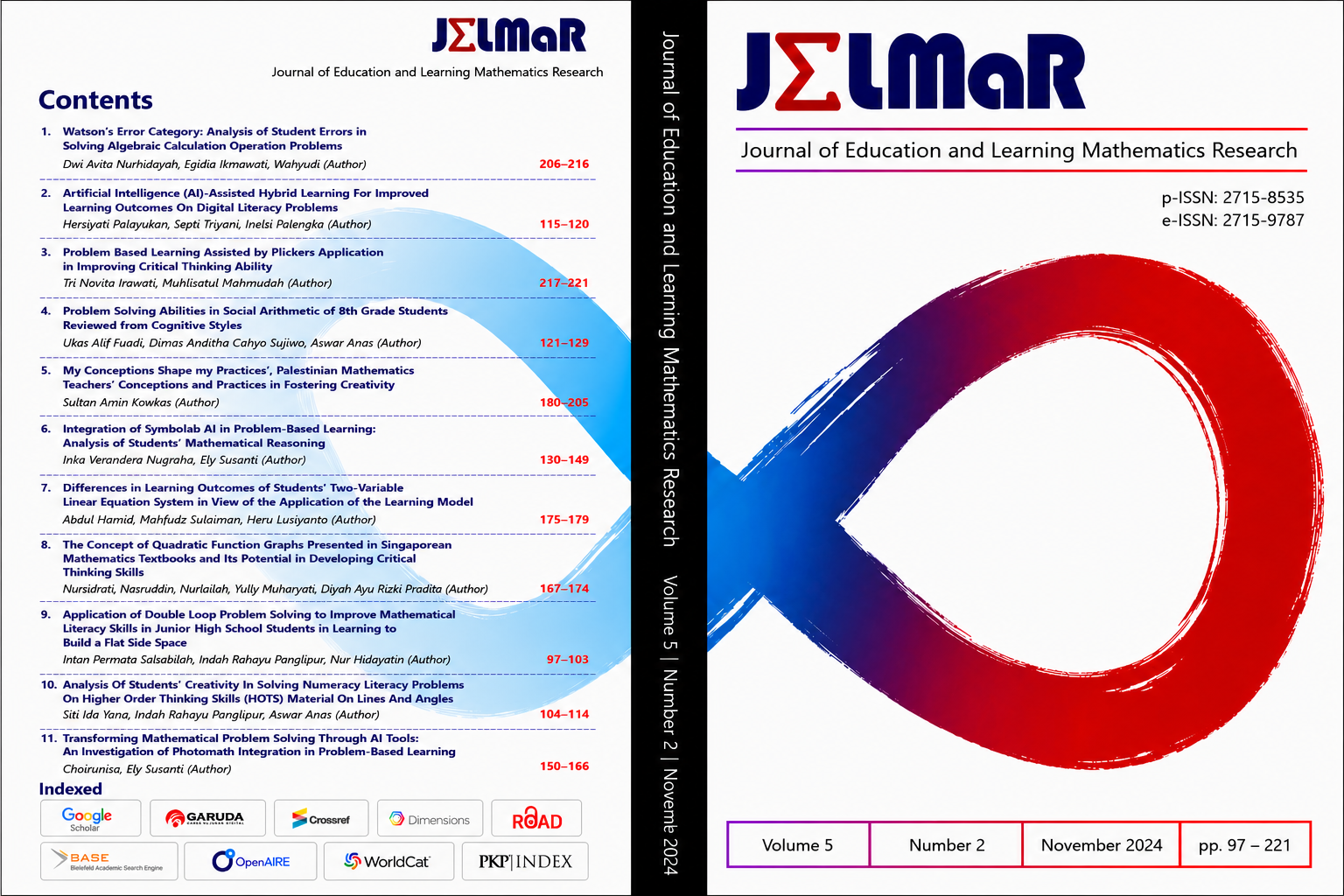
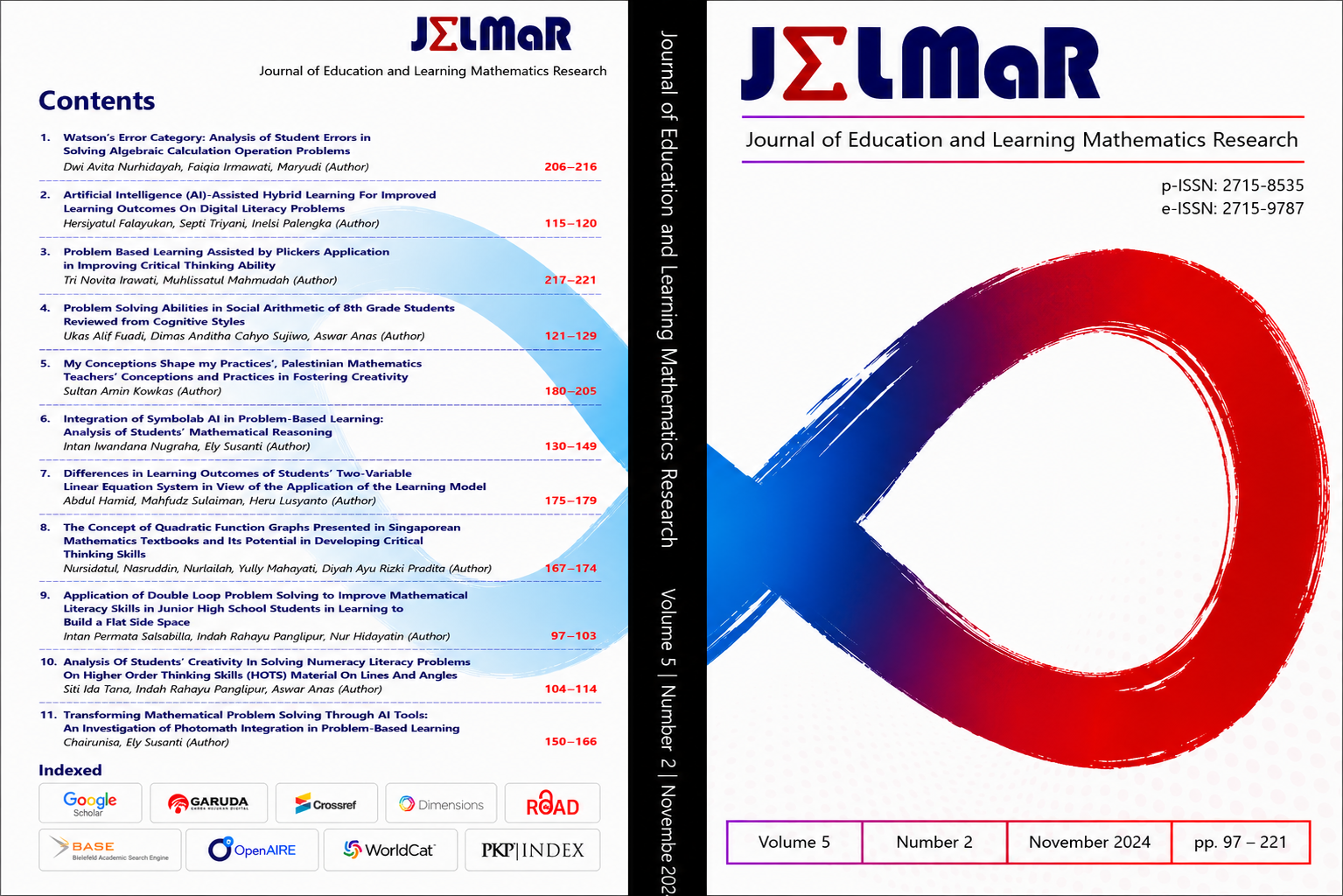
November 2024
Vol. 5 No. 2 (2024)Volume 5 Number 2 (November 2024) of the Journal of Education and Learning Mathematics Research (JELMaR) presents eleven peer-reviewed articles highlighting recent advances in mathematics education. This issue covers topics including artificial intelligence (AI) in mathematics learning, problem-based learning, mathematical reasoning, critical thinking, mathematical literacy, creativity, cognitive styles, teacher practices, error analysis, and mathematics textbook analysis. Collectively, these studies contribute innovative perspectives and practical implications for improving mathematics teaching, learning, and research in the digital era.
pp. 97-221 | p-ISSN: 2715-8535 | e-ISSN: 2715-9787
-
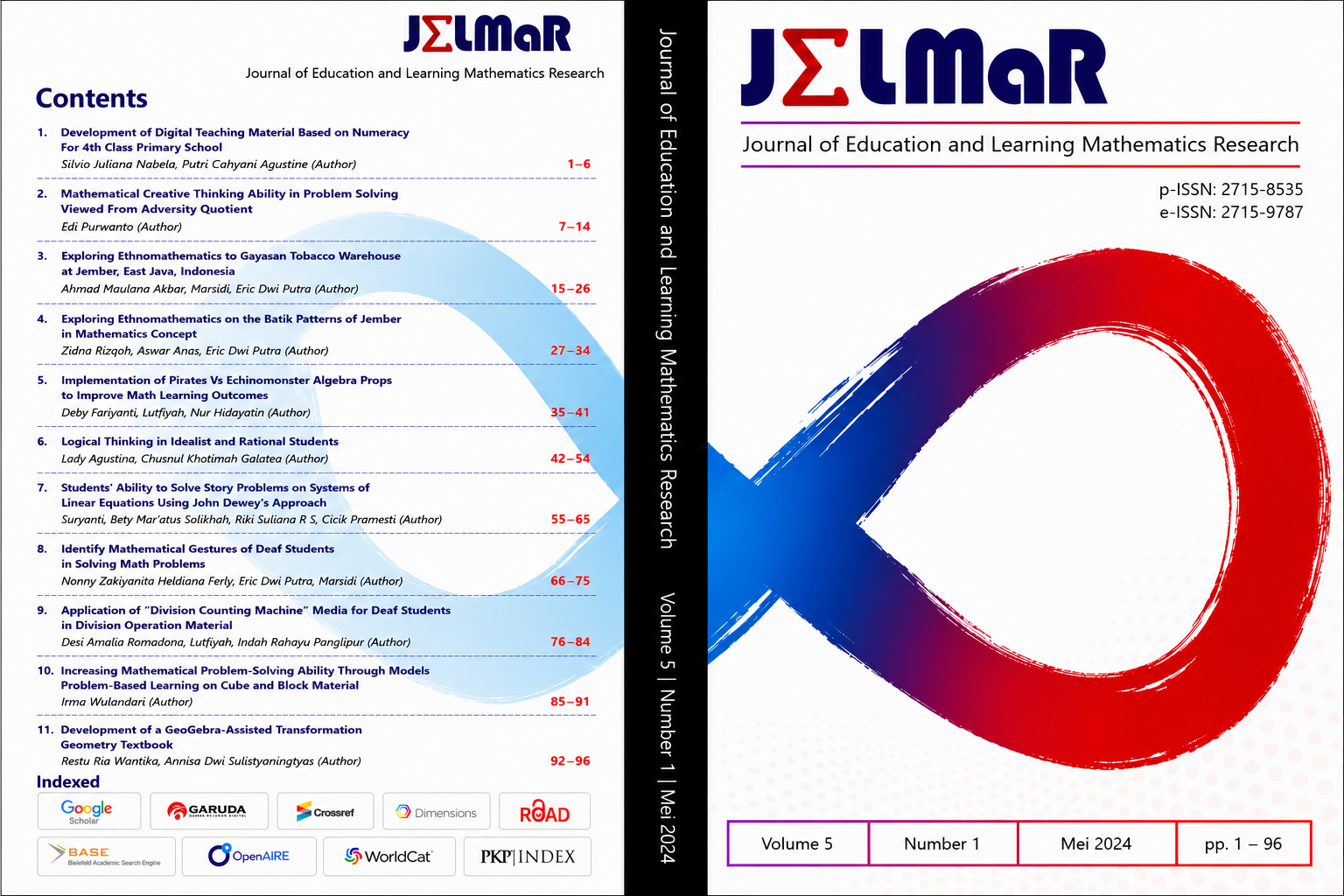
Mei 2024
Vol. 5 No. 1 (2024)Volume 5 Number 1 (May 2024) of the Journal of Education and Learning Mathematics Research (JELMaR) presents eleven peer-reviewed articles that explore diverse perspectives in mathematics education. This issue features studies on digital teaching materials, creative and logical thinking, ethnomathematics, inclusive mathematics education for deaf students, problem-solving skills, GeoGebra-assisted learning, learning media development, and mathematics instruction. Together, these contributions provide innovative insights and practical approaches to enhance mathematics teaching and learning while promoting creativity, inclusivity, cultural relevance, and the effective integration of educational technology.
pp. 1–96 | p-ISSN: 2715-8535 | e-ISSN: 2715-9787
-
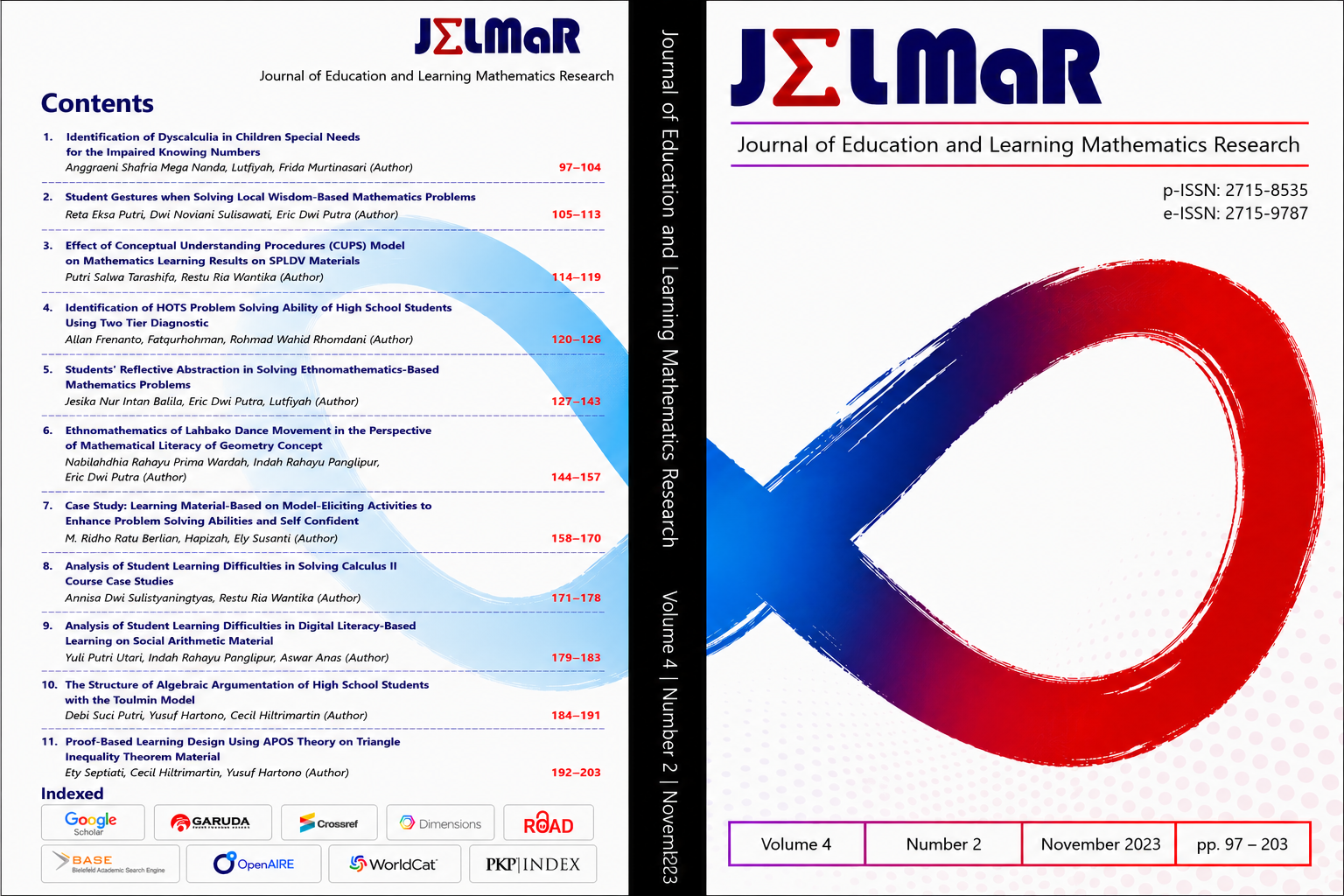
November 2023
Vol. 4 No. 2 (2023)Volume 4 Number 2 (November 2023) of the Journal of Education and Learning Mathematics Research (JELMaR) presents eleven peer-reviewed articles that examine contemporary issues and innovative practices in mathematics education. This issue features research on dyscalculia identification, students' mathematical gestures, conceptual understanding, higher-order thinking skills (HOTS), ethnomathematics, problem-solving abilities, digital literacy, algebraic argumentation, proof-based learning, and learning difficulties in mathematics. Collectively, these studies offer theoretical insights and practical implications for enhancing mathematics teaching, fostering mathematical reasoning, and supporting inclusive and culturally responsive learning environments.
pp. 97–203 | p-ISSN: 2715-8535 | e-ISSN: 2715-9787
-
Mei 2023
Vol. 4 No. 1 (2023)Volume 4 Number 1 (May 2023) of the Journal of Education and Learning Mathematics Research (JELMaR) presents ten peer-reviewed articles that explore current trends and innovations in mathematics education. This issue features studies on problem-solving, project-based learning (PjBL), TPACK integration, mathematical communication, statistical literacy, creative thinking, learning motivation, mathematical concept understanding, HOTS-oriented instructional materials, and students’ cognitive systems. Collectively, these contributions provide valuable theoretical and practical insights into effective mathematics teaching and learning, emphasizing the development of higher-order thinking skills, technology-enhanced instruction, and learner-centered pedagogical approaches.
pp. 1–96 | p-ISSN: 2715-8535 | e-ISSN: 2715-9787
-
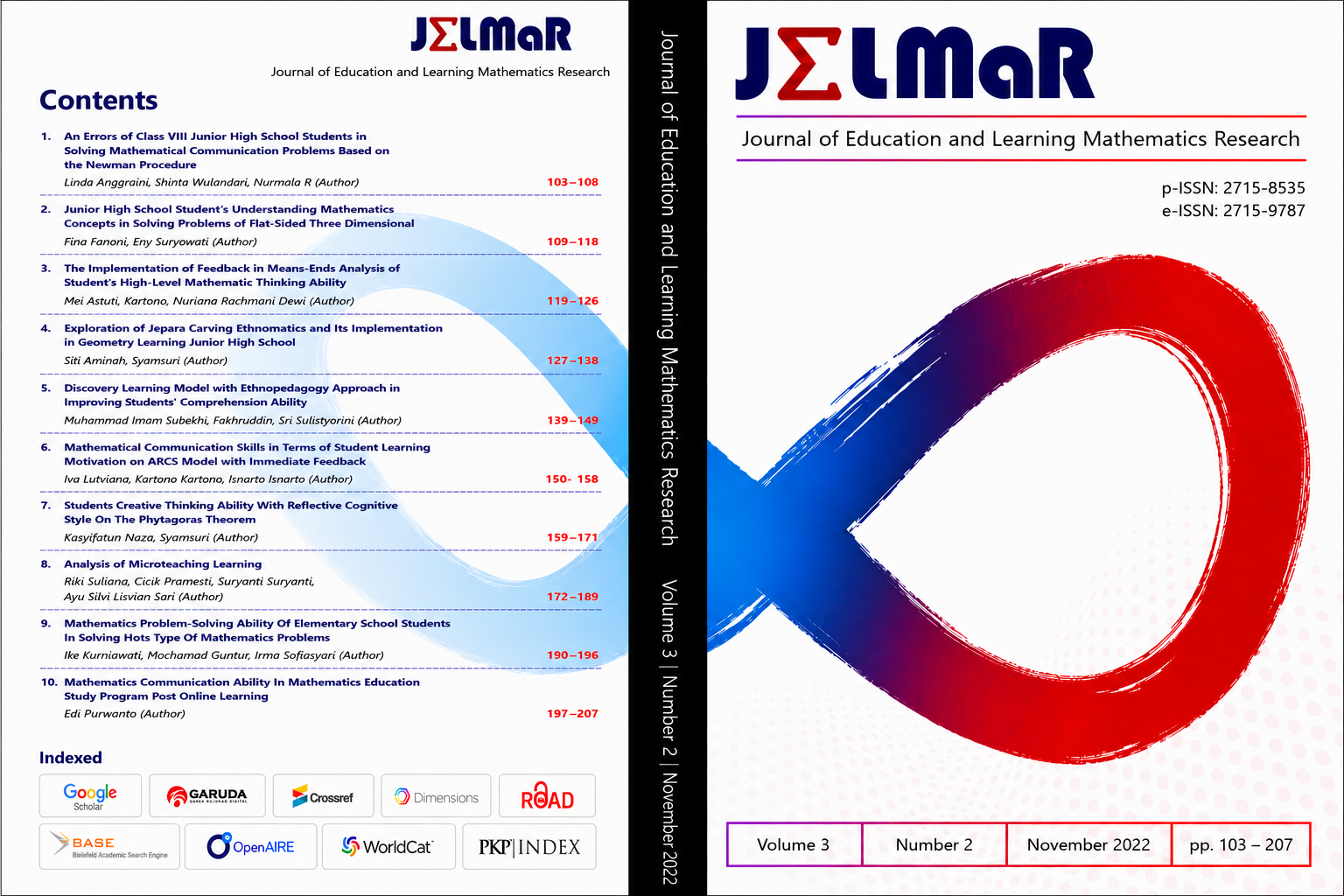
November 2022
Vol. 3 No. 2 (2022)Volume 3 Number 2 (November 2022) of the Journal of Education and Learning Mathematics Research (JELMaR) presents ten peer-reviewed articles that examine diverse issues in mathematics education. This issue features studies on mathematical communication, students' conceptual understanding, higher-order thinking skills (HOTS), ethnomathematics, ethnopedagogy, creative thinking, learning motivation, problem-solving abilities, microteaching, and mathematics teacher education. Collectively, these contributions provide valuable insights into improving mathematics teaching and learning through innovative pedagogical approaches, culturally responsive education, and the development of students' mathematical reasoning and communication skills.
pp. 103–207 | p-ISSN: 2715-8535 | e-ISSN: 2715-9787
-
Mei 2022
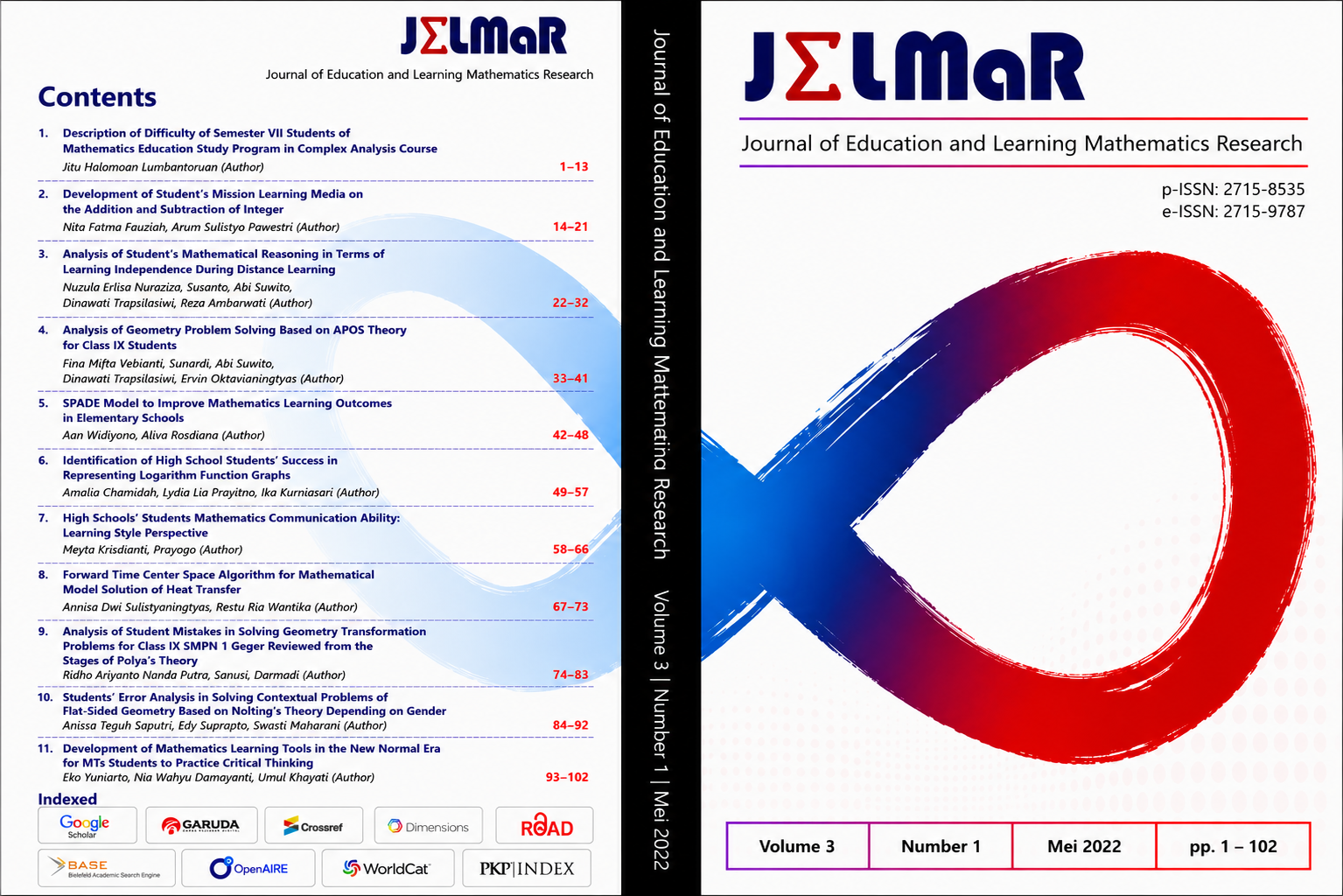
Vol. 3 No. 1 (2022)Volume 3 Number 1 (May 2022) of the Journal of Education and Learning Mathematics Research (JELMaR) presents eleven peer-reviewed articles that address a wide range of topics in mathematics education and mathematics learning. This issue features studies on students' learning difficulties, learning media development, mathematical reasoning, problem-solving, mathematical communication, critical thinking, error analysis, mathematical modeling, geometry transformation, graph representation, and technology-enhanced learning. Collectively, these contributions offer valuable theoretical and practical insights into improving mathematics instruction, strengthening students' higher-order thinking skills, and advancing innovative teaching practices across various educational levels.
pp. 1–102 | p-ISSN: 2715-8535 | e-ISSN: 2715-9787
-
November 2021
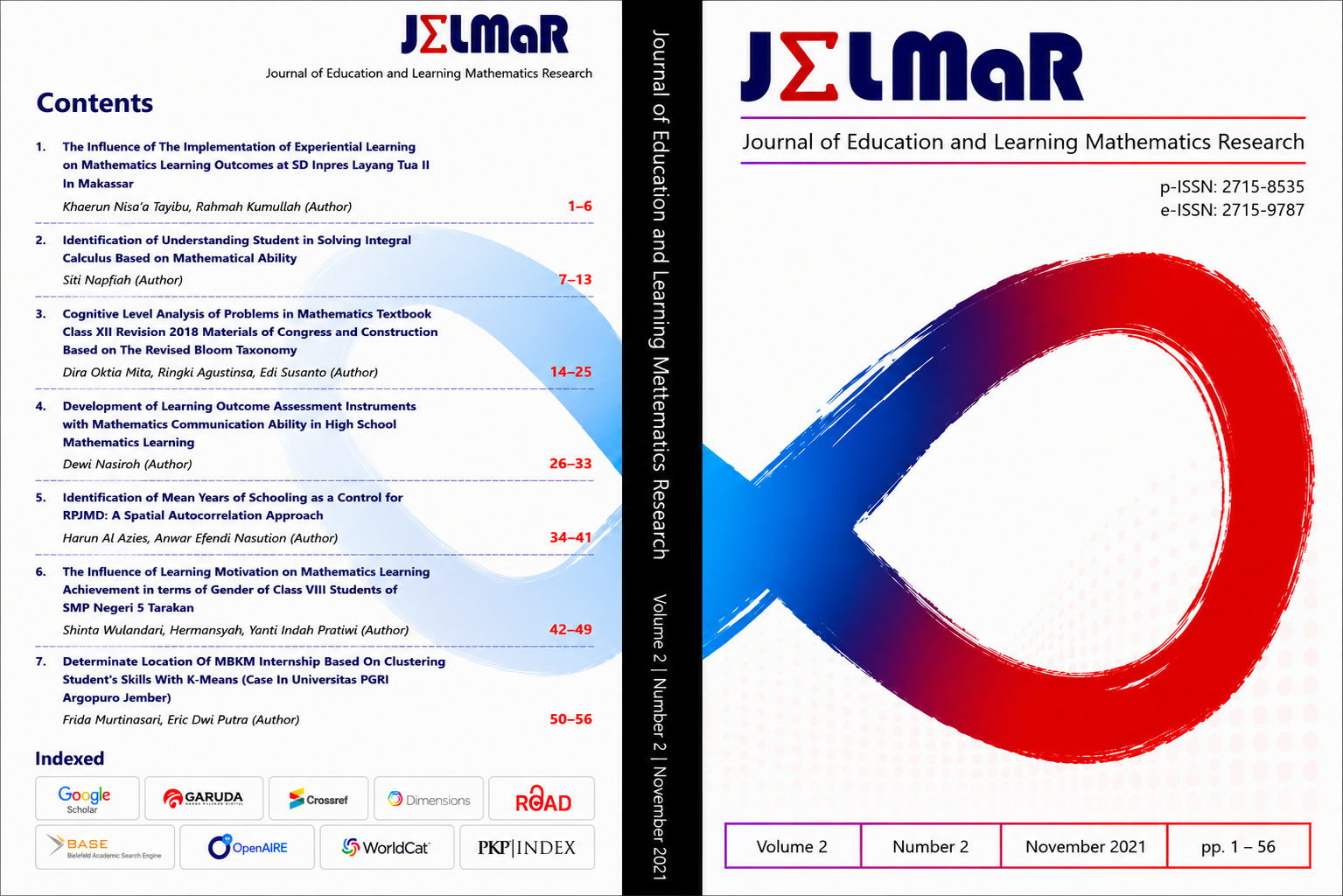
Vol. 2 No. 2 (2021)Volume 2 Number 2 (November 2021) of the Journal of Education and Learning Mathematics Research (JELMaR) presents seven peer-reviewed articles that highlight emerging issues and innovations in mathematics education. This issue features studies on experiential learning, students' conceptual understanding, mathematics communication, assessment instrument development, learning motivation, spatial data analysis in education, and data mining applications for MBKM internship placement. Together, these contributions provide valuable insights into effective mathematics teaching, educational assessment, technology-supported decision-making, and evidence-based approaches to improving learning outcomes across different educational contexts.
pp. 1–56 | p-ISSN: 2715-8535 | e-ISSN: 2715-9787
-
Mei 2021
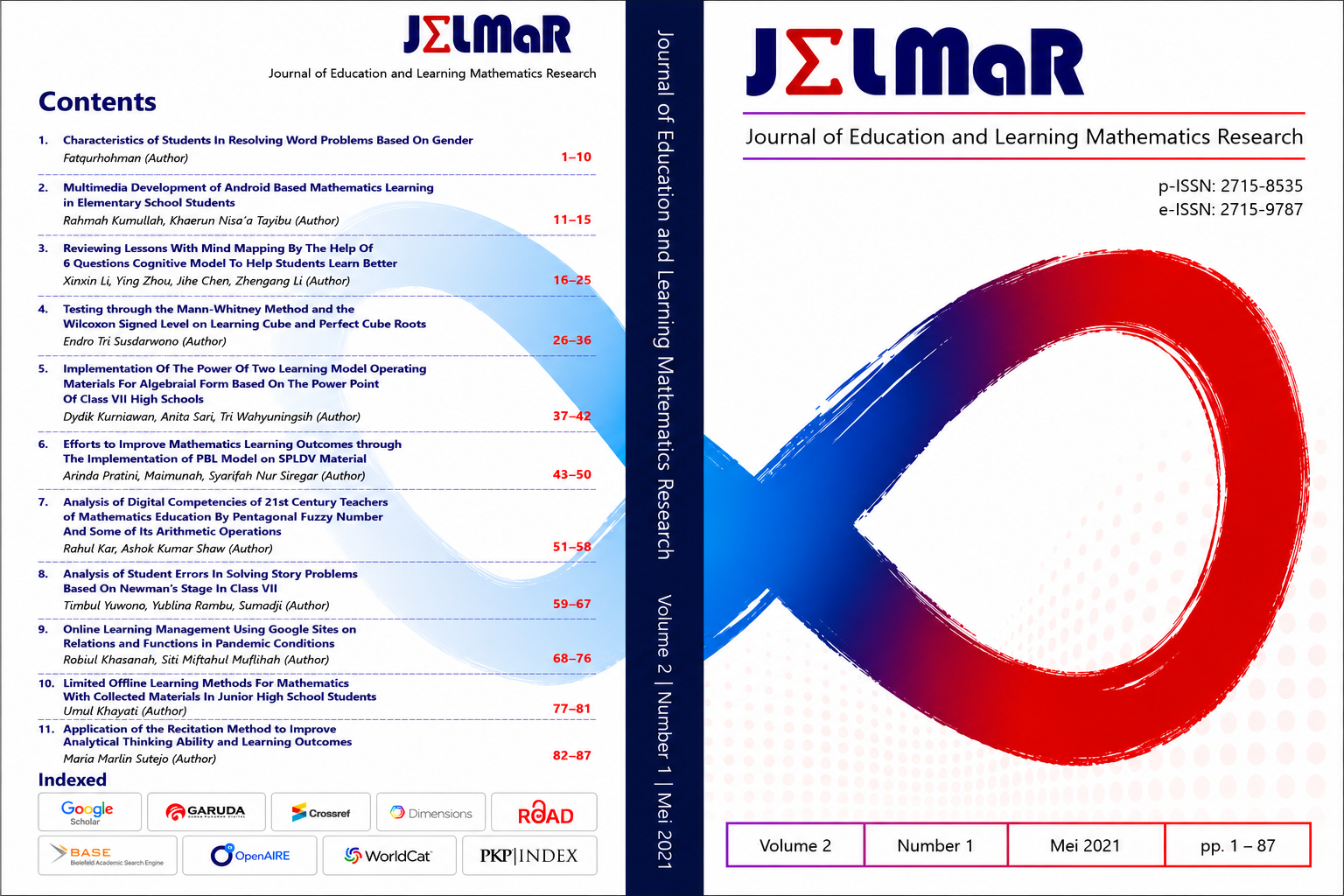
Vol. 2 No. 1 (2021)Volume 2 Number 1 (May 2021) of the Journal of Education and Learning Mathematics Research (JELMaR) presents eleven peer-reviewed articles that explore contemporary issues in mathematics education and innovative instructional practices. This issue features studies on problem-solving, digital competencies of mathematics teachers, multimedia and online learning, problem-based learning (PBL), mathematical error analysis, learning motivation, analytical thinking, statistical methods in mathematics education, and technology-assisted instruction. Collectively, these contributions provide valuable theoretical and practical insights into improving mathematics teaching and learning, strengthening students' higher-order thinking skills, and supporting the integration of digital technologies in education.
pp. 1–87 | p-ISSN: 2715-8535 | e-ISSN: 2715-9787
-
November 2020
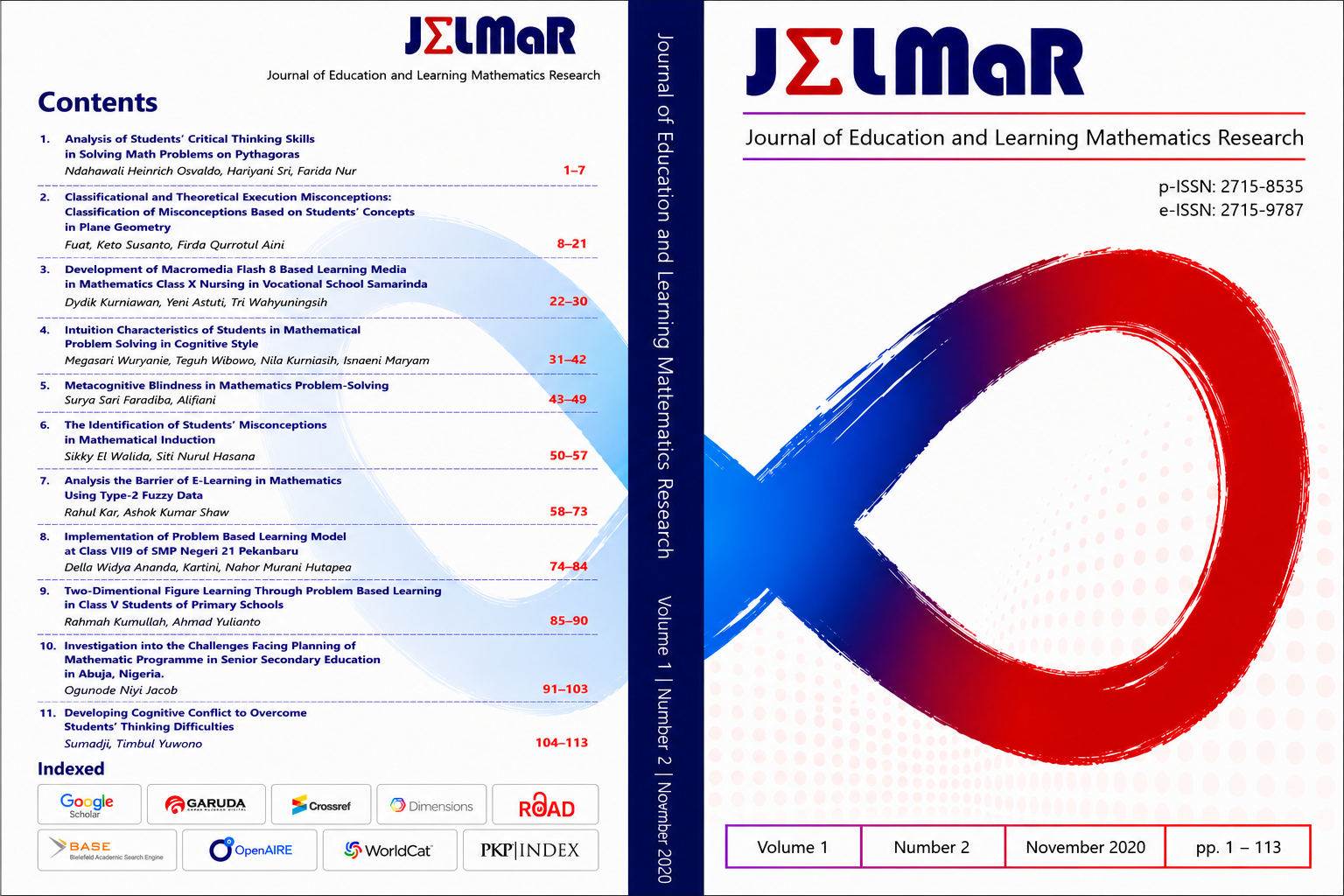
Vol. 1 No. 2 (2020)Volume 1 Number 2 (November 2020) of the Journal of Education and Learning Mathematics Research (JELMaR) presents eleven peer-reviewed articles that explore fundamental issues and innovative approaches in mathematics education. This issue features studies on critical thinking, students’ misconceptions, problem-based learning (PBL), mathematical intuition, metacognition, e-learning, instructional media development, cognitive conflict, and educational challenges in mathematics. Collectively, these contributions provide valuable theoretical and practical insights into strengthening mathematics teaching and learning, fostering higher-order thinking skills, and supporting the development of effective and technology-enhanced mathematics education across diverse educational contexts.
pp. 1–113 | p-ISSN: 2715-8535 | e-ISSN: 2715-9787
-
Mei 2020
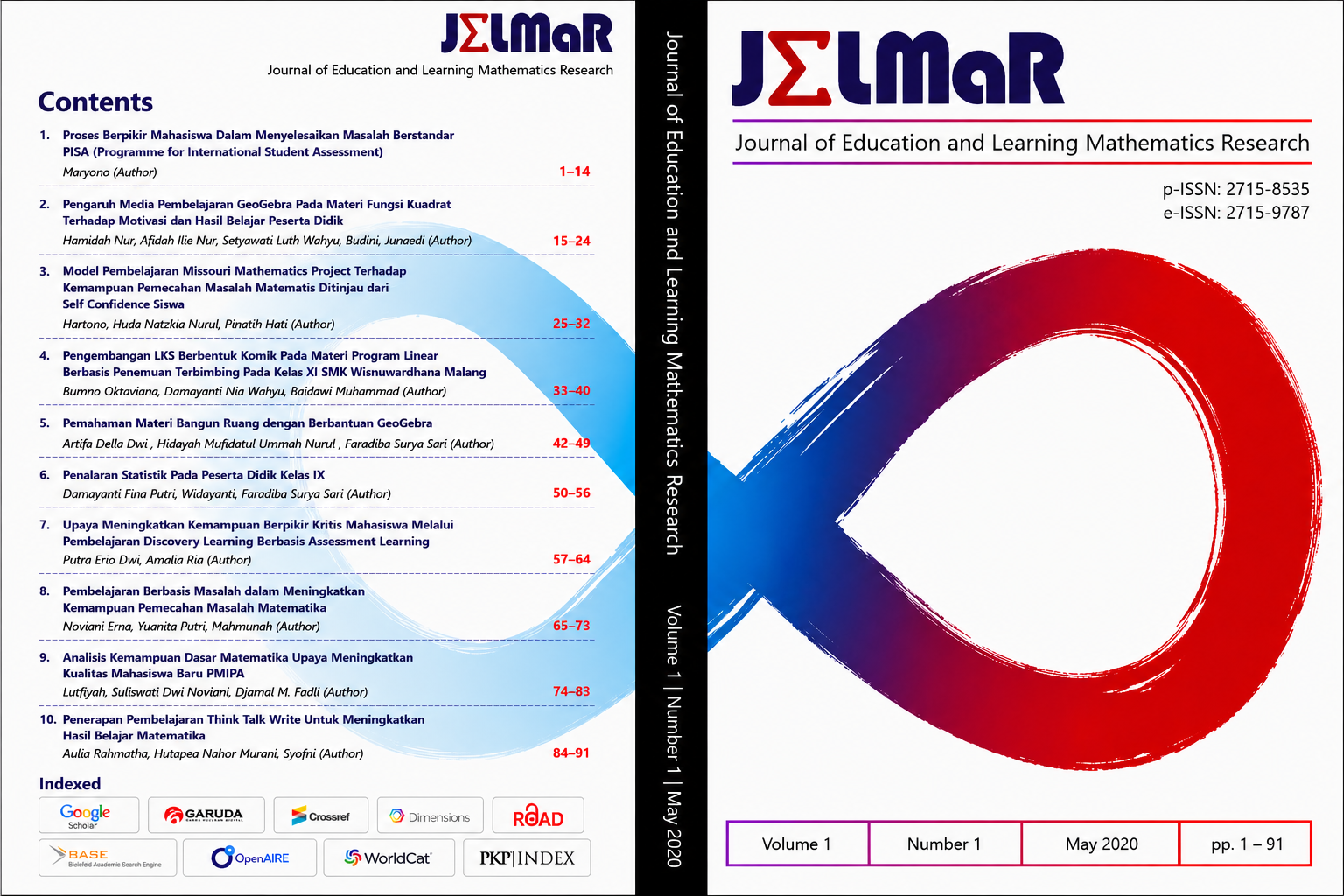
Vol. 1 No. 1 (2020)Volume 1 Number 1 (Mei 2020) features ten articles on mathematics education covering PISA-based problem solving, GeoGebra-assisted learning, statistical reasoning, critical thinking, problem-based learning, and instructional innovation. This inaugural issue highlights research aimed at improving students’ mathematical understanding, reasoning, and learning outcomes.
pp. 1–91 | p-ISSN: 2715-8535 | e-ISSN: 2715-9787