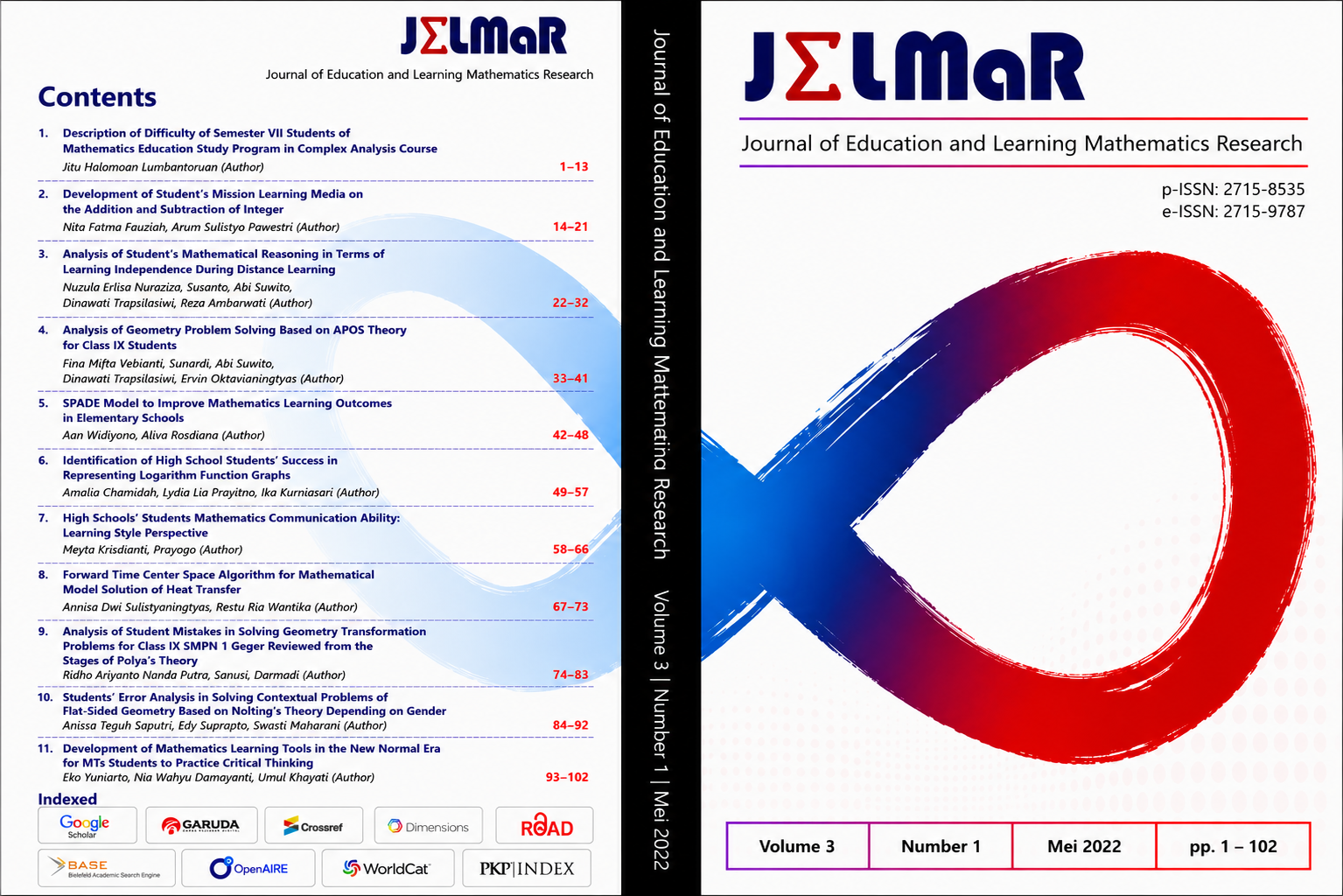
Development of Mathematics Learning Tools In The New Normal Era for MTs Students to Practice Critical Thinking
DOI:
https://doi.org/10.37303/jelmar.v3i1.119Keywords:
Learning Media, E-Learning, Critical ThinkingAbstract
The purpose of this research is that learning in Indonesia continues. The Covid-19 pandemic in Indonesia has made learning carried out online. Therefore, Learning Tool Development is also carried out online by utilizing E-Learning. The e-Learning used is zoom, quizizz, and google classroom. With online learning, it is hoped that students will remain enthusiastic in carrying out learning, even though there are many obstacles experienced by students during this online learning. Learning tools provided online are expected to train students' critical thinking in ways or strategies to solve mathematical problems or problems. By designing learning tools that are attractive, creative, and efficient so that students do not get bored during online learning, and can use smartphones positively and wisely. Learning kits consist of lesson plans, quizizz- based worksheets, and YouTube audio-visual materials. The purpose of this research is for learning to continue even in the new normal era due to the Covid-19 pandemic, by utilizing technology and information media such as E-learning.
Downloads
References
Anggraeni, P., & Akbar, A. (2019). Suitability of learning implementation plan and learning process. Basic Charm Journal, 6(2), 56.
Brahma, I. A. (2020). Use of Zoom as online-based learning in sociology and anthropology subjects for PPKN students at STKIP Kusumanegara Jakarta. Script, 6(2), 98.
Fannie, D. R., & Rohati. (2014). Development of POE-based student worksheets (Predict, Observe, Explain) on linear program material for class XII senior high school. Journal of Science, 8(1), 96.
Hasibuan, M. S., & Meitro. (2014). Implementation of Moodle LMS-based synchronous learning method. SEMBISTEK, 730.
Hu, W., et al. (2016). Effects of a critical thinking skills program on the learning motivation of primary school students. Roeper Review, 38(2), 70–83. https://doi.org/10.1080/02783193.2016.1150374
Indarti. (2014). Implementation of e-learning with asynchronous method to increase learning motivation using a case study approach. Jurnal Pilar Nusa Mandiri, 10(1), 30.
Johnson, E. B. (2014). Contextual teaching & learning. Kaifa.
Marzuki, & Basariah. (2017). The influence of problem-based learning and Project Citizen model in civic education learning on students' critical thinking ability and self-discipline. Cakrawala Pendidikan, 36(3), 382–400.
Mujib, & Mardiyah. (2017). Kemampuan berpikir kritis matematis berdasarkan multiple intelligences. Al-Jabar: Jurnal Pendidikan Matematika, 8(2), 187–196.
Musanna, A. (2017). The rationality of Ki Hadjar Dewantara's educational praxis revitalization. Jurnal Pendidikan dan Kebudayaan, 2(1), 117–133.
Pane, A. (2017). Belajar dan pembelajaran. Jurnal Kajian Ilmu-Ilmu Keislaman, 3(2), 333–352.
Parta, I. N. (2009). Pengembangan model pembelajaran inkuiri untuk memperhalus pengetahuan matematika mahasiswa calon guru melalui pengajuan pertanyaan (Disertasi tidak dipublikasikan). Program Pascasarjana Universitas Negeri Surabaya.
Plomp, T., & Nieveen, N. (2009). An introduction to educational design research. SLO.
Purwanto, I. (2019). Upaya meningkatkan kompetensi guru binaan dalam penyusunan RPP yang baik dan benar sesuai Kurikulum 2013/2019 melalui pendampingan berbasis MGMP. JISIP, 3(1), 69–80.
Rachmantika, A. R., & Wardono. (2019). Peran kemampuan berpikir kritis siswa pada pembelajaran matematika dengan pemecahan masalah. PRISMA, Prosiding Seminar Nasional Matematika, 2, 439–443.
Republik Indonesia. (2016). Peraturan Menteri Pendidikan dan Kebudayaan Republik Indonesia Nomor 22 Tahun 2016 tentang Standar Proses Pendidikan Dasar dan Menengah. Kementerian Pendidikan dan Kebudayaan.
Ridwan, Zulkardi, & Darmawijoyo. (2016). Pengembangan perangkat pembelajaran aritmetika sosial berbasis problem-based learning di kelas VII. Jurnal Elemen, 2(2), 92–115.
Rosmaiyadi. (2017). Analisis kemampuan berpikir matematis siswa dalam learning cycle 7E berdasarkan gaya belajar. Axiom: Jurnal Pendidikan dan Matematika, 6(1), 12–19.
Sabran, & Sabara, E. (2019). Keefektifan Google Classroom sebagai media pembelajaran. Prosiding Seminar Nasional LP2M UNM, 122–125.
Setiawan, P. (2020, January 28). Pengertian e-learning: Karakteristik, kelebihan, kekurangan, jenis, komponen, dan menurut para ahli. GuruPendidikan. Diakses 2 Juli 2020.
Shalwa, A. (2020, March 26). Pembelajaran daring yang efektif. Kompasiana. Diakses 2 Juli 2020.
Sugiharti, S. D., Supriadi, N., & Andriani, S. (2019). Efektivitas model learning cycle 7E berbantuan e-modul untuk meningkatkan kemampuan berpikir kritis peserta didik SMP. Axiom: Jurnal Pendidikan dan Matematika, 8(1), 41–49.
Sulistyorini, Y., & Napfiah, S. (2019). Analisis kemampuan berpikir kritis siswa dalam menyelesaikan soal kalkulus. Axiom: Jurnal Pendidikan dan Matematika, 8(2), 279–287.
Wibawa, R. P., Astudi, R. I., & Pangestu, B. A. (2019). Quizizz smartphone-based application as learning media. Dinamika Pendidikan, 14(2), 244–253
Downloads
Published
Issue
Section
License

This work is licensed under a Creative Commons Attribution-ShareAlike 4.0 International License.